Beyond the Big Three
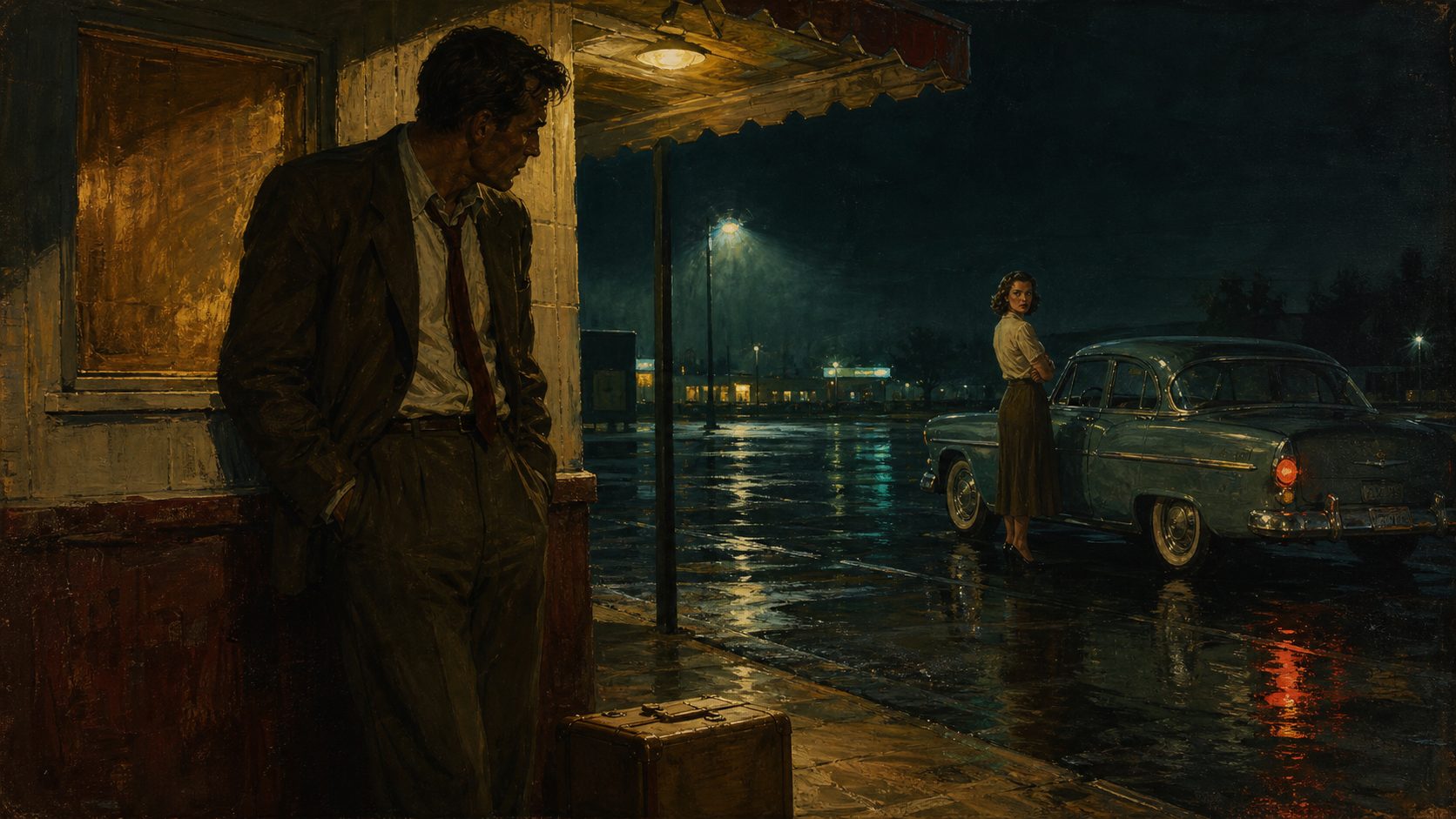
American crime fiction has a front parlor, and three names are always sitting in it: Dashiell Hammett, Raymond Chandler, and Mickey Spillane. They earned the good chairs. Hammett stripped crime writing down to hard structural lines. Chandler made Los Angeles shimmer with corruption and bruised romance. Spillane took postwar anger and turned it into a fist that sold by the millions. Nobody's arguing with the room.
The trouble is that the house is a lot bigger than the parlor, and most of it never gets a tour.
Behind those famous names stands a whole generation of paperback writers who worked in cheaper formats, on tighter deadlines, and closer to the money worries of the people buying them. Charles Williams wrote about men whose ordinary weaknesses hardened into airtight traps. Gil Brewer made desire feel like a fever that knew exactly where the gun was kept. Peter Rabe studied power with the cool interest of a man watching an experiment. Harry Whittington could take a simple jam and screw it down until the character cracked. Vin Packer wrote psychological crime where identity, sexuality, and social pressure counted for as much as any piece of evidence. These writers didn't just copy the masters. They picked the whole genre up and moved its center of gravity somewhere new.
From detective to defendant
The classic private eye walks into trouble on the clock. However bloody he gets, the investigation gives him a job to do and a little control over how it goes. A lot of paperback originals yank that safety net away. The man at the center is a salesman, a drifter, a small businessman, a washed-up athlete, a bored husband, a two-bit crook. He doesn't solve the crime from outside it. He makes the first bad compromise and wakes up inside the thing.
That change makes for a different kind of suspense. The question stops being "Who did it?" and turns into something worse: how far will this guy go now that turning back would mean confessing?
He might not be innocent, but you recognize him. He wants money, sex, status, freedom, one clean shot at starting over. Regular wants, all of them. It's the methods that go criminal, and they go criminal by degrees, a little at a time, and the noir sits right in the gap between the ordinary want and the ugly way he chases it.
The American pressure system
These books came out during decades everybody remembers as prosperous, and yet the pages are full of people one missed payment from the floor giving out. The good life shows up as an advertisement. The house, the car, the clothes, the body, the job that's supposed to announce you made it. The characters can see the whole display in the window and can't cover the price of admission.
Crime turns into a shortcut through a society that already runs on winning. The protagonist tells himself he isn't breaking the rules. He's finally playing them the way they were meant to be played.
That's the part that keeps these books sharper than a plain cautionary tale. They know greed doesn't grow in a vacuum. It gets fed by comparison, by humiliation, by debt, by the daily show of other people having more than you do. The crime is on the man who commits it, sure, but he's committing it inside a machine built to squeeze him.
Fast books, serious wounds
The paperback format pushed writers to move fast, and speed didn't have to mean shallow. A good one could set up a marriage, a money problem, a temptation, and one dangerous lie in a handful of pages, because the genre came with furniture everybody already knew. The reader recognized the motel, the cheap bar, the hot highway, the furnished room, the dinner table where nobody's talking.
The best writers took those familiar props and leaned on them with real precision. A gun mattered less than which trembling hand got pushed into picking it up. The seductive stranger mattered less than whatever the protagonist had already decided she stood for. The plot grew straight out of the lie the character liked best about himself. The weaker books just copied the surface: tough talk, easy sex, a body dropping out of nowhere. The stronger ones stopped to ask what kind of American dream could make a corpse look like a reasonable business expense.
Why they slipped from view
Paperback originals were built to move through wire racks, not to sit on a syllabus. People read them to pieces and threw them out. Writers published under house names, under pen names, under three or four names of their own. The covers usually shouted louder than the bylines, and the histories that came later got organized around movie adaptations or a short list of respectable authors.
Then plain snobbery finished the job. A cheaply printed novel with a lurid cover got assumed to hold cheap thinking, and that was that.
Rediscovery has fixed some of the neglect, but nostalgia brings its own trap. Not every forgotten paperback is a buried masterpiece. Deadlines bred repetition. Women got jammed into the temptress slot or the victim slot and not much else. Attitudes about race and sex could turn ugly even by the standards of the day. Taking the field seriously means telling the real achievements apart from the junk, not handing out medals for being hard to find.
The road ahead
This series is going to look at the business that made these books possible and the writers who made the form their own. I want to get into how desperation became plot, why desire kept curdling into self-destruction, and whether "noir" names a mood, an ending, or an actual moral structure holding the thing up.
The famous names will stay close by. No tradition grows without ancestors, and I'm not pretending otherwise. But the point is to walk past the parlor and into the back rooms, where the less celebrated writers were taking American crime fiction apart and reassembling it for the rack. The furniture back there is cheaper, and the locks on the doors are a good deal better.