The Artist, the Art Director, and the Deadline
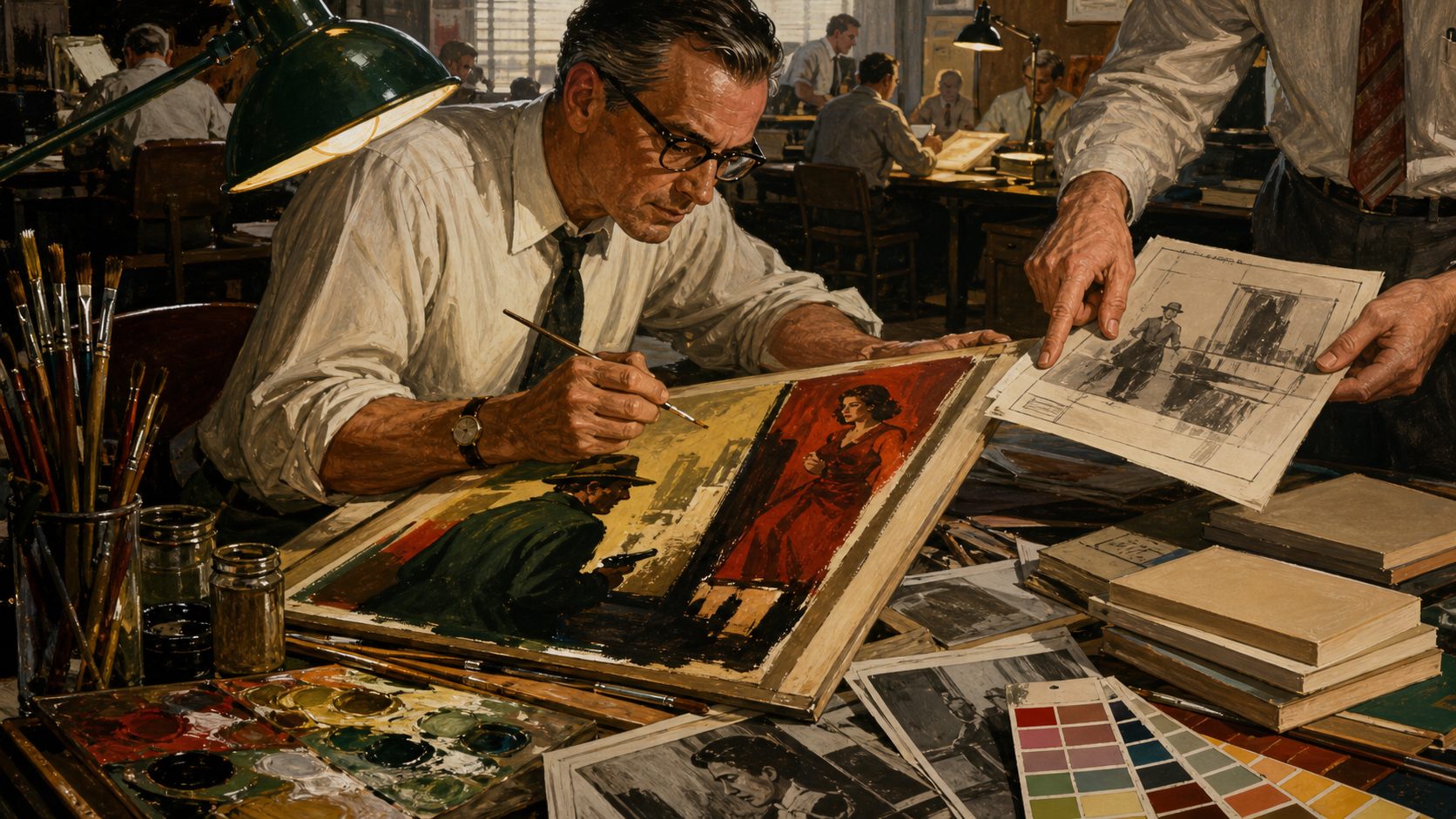
Forget the lone genius by the window waiting for the muse. That story has nothing to do with how paperback covers actually got made.
A cover came off an assembly line: publisher, editor, art director, designer, a model or a reference photo, the illustrator, the letterer, the printer, the distributor, and finally the rack in the store. Talent counted, of course it did. So did the calendar, the fee, and the plain physical fact that words had to fit somewhere on the thing.
The assignment
The illustrator might get the whole manuscript. He might get a synopsis. He might get a title and a sentence about what would sell, and that was it. He'd work up some rough concepts. The art director picked one, or hacked two together, or sent it all back. Give the pose more panic. Drop that neckline. More fire in the background. And leave me a bigger blank up top, I've got type to put there.
Staying true to the actual novel was always wrestling with making the package pop, and the package usually won. The job was never "interpret this book however you like." The job was "make this whole category impossible to walk past, and have it Thursday."
Reference and invention
Artists worked from models, photographs, props, whole scenes rigged up in the studio. Reference is how you get believable anatomy and the right fold in a coat and light that behaves, and you get it fast, which matters when the clock's running. Then the painter went in and changed the faces, moved people closer together, swapped the setting, cranked the scale, whatever the drama needed.
None of that is tracing. It's building something new out of real parts. The camera can only record what happened to be standing in front of it. The cover has to stage what the buyer needs to believe, which is a different and harder thing.
The invisible collaborators
Art directors and designers get almost no credit in the pulp story, and they've earned a lot more than they get. They built the house looks. They knew which artist to hand which job. They placed the type and they understood, down in their bones, what would and wouldn't survive cheap printing. A whole chunk of what we now file under "the style of the era" was really their judgment calls.
The models, the photographers, the letterers, the folks running the presses, they all disappear behind the finished picture too. Even the names we do celebrate were working inside a crowd, on somebody else's schedule, for somebody else's product.
Ownership and loss
The original paintings were treated like shop supplies. Publishers stored them, mailed them back, sold them off, painted over the reused ones, or just pitched them, and the practice changed from house to house with no logic you could count on. The artist often didn't keep the reproduction rights at all. Canvases that pull real money from collectors today were, at the time, considered scrap once the book shipped.
That's worth remembering before anybody gets too misty about the golden age. The beauty came out of working arrangements that frequently paid the person who made it like the help.
What professionalism looks like
Here's the part that actually floors me. It isn't that deadline work sometimes came out formulaic. Of course some of it did. It's that so much of it is still alive on the page fifty and sixty years on. One person had to solve anatomy, costume, staging, color, the shrink to paperback size, and a clear story, solve all of it in a hurry, and then live with the type landing right across the best passage in the picture.
Professionalism meant making the good call before the good conditions ever showed up, because they weren't going to.
So the finished cover belongs to neither side clean. Not purely to commerce, not purely to some private flash of inspiration. It's the record of a negotiation, artist against art director, image against title, story against market, craft against the clock. You can't see the deadline anywhere in the painting. You can feel it in every stroke that didn't have time to be anything but right.
← Back to The Pulp Desk