The War Against the Mafia Begins
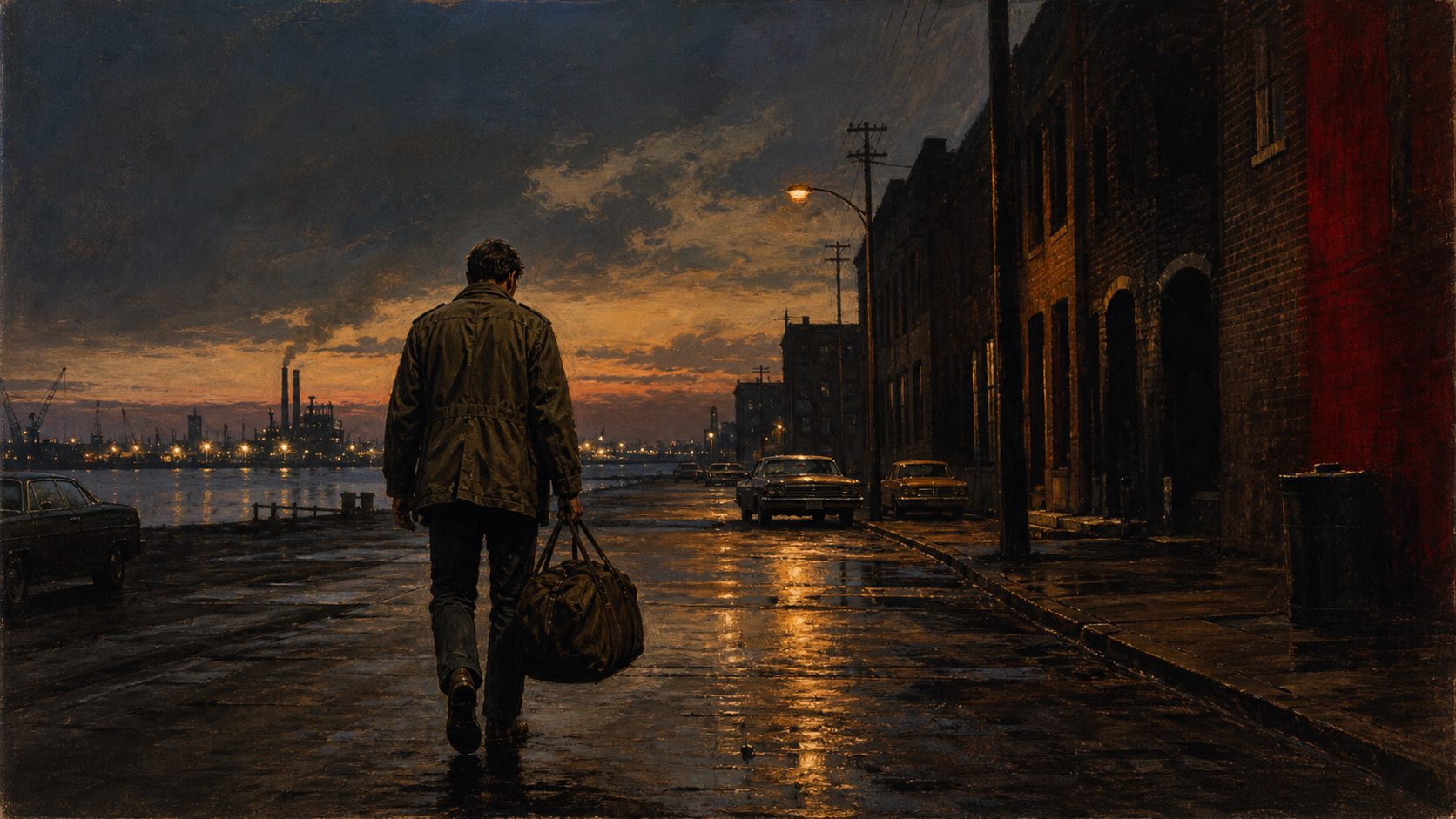
Every long-running action series has a first book, and in the good ones you can still feel the door standing open behind the hero. He hasn't become a franchise yet. No aliases, no safehouses, no war room full of specialists, none of the rogue's gallery that'll keep him busy for the next forty years. He's just a man, standing close enough to an ordinary life that he can still see it. Sometimes he even thinks he's going back to it.
Then something happens that shuts the door.
For Mack Bolan, that something was his family.
Don Pendleton put Bolan on the page in 1969, in a book called War Against the Mafia. You probably know the shape of it. Bolan's an Army sniper, decorated, deep into a tour in Vietnam, when word reaches him that his family back home has been destroyed. Pull the thread and you find a Mafia loan operation at the other end. He comes home and turns the trade he learned overseas on the men responsible.
Say it that fast and it sounds like a thousand other revenge stories. It isn't, quite. Pendleton didn't just hand a soldier a list of names to cross off. He handed him a problem big enough to carry a series.
The war comes home
Bolan's real discovery isn't that evil exists. He's a combat veteran; he sorted that out a long time ago. What gets him is realizing the line between the war over there and the peace back here was never as solid as he'd been told.
The country sent him abroad to kill the enemies it named, by the rules it set. Home turns out to have its own enemy, one that feeds on fear and debt and silence and every soft spot in the machinery that's supposed to stop it. The cops might be honest. The system's still slow. Witnesses get scared. Officials have a price. A crime outfit can settle into a town until it's just part of the furniture.
So Bolan rearranges the furniture. He turns the town back into a battlefield, because that's the one kind of ground he knows how to win.
This is where his power comes from, and it isn't the guns. He's not a furious man with a rifle. He's a professional carrying one kind of order into a place where the official kind has quit working. Surveillance, position, timing, a good lie at the right moment, force he can switch on and off like a tool. The war is personal, but he doesn't fight it in a red haze. The rage gets him off the couch. The training decides where he points.
Not a superhero. A knight with a bad ending coming.
The covers sold the hardware, naturally. A gun in a fist moves copies. But Bolan's family tree runs back through the wandering knight and the Western gunfighter: the capable stranger who rides into a rotten town, sets a few things right, and can't stay to enjoy the quiet he made.
Pendleton's twist is darker, because Bolan doesn't wander into anything. He declares it. He picks the war up on purpose, knowing full well it's going to eat the rest of his life.
That's what gives the early books their weight. Bolan isn't just risking his safety, he's signing away any claim on a normal one, and he knows it going in. You can't build a home while you're announcing open season on an organization that keeps records and holds grudges. You can't ask a woman to plan a future with a man who's already turned his own future into a firing line. He gets to protect other people's families, in the abstract, only by writing off the chance of ever having one.
That's pulp and tragedy in the same breath, and I don't think Pendleton got there by accident.
Calling Bolan a knight doesn't bless the killing. It names the thing he's trying to live up to. The gap between that ideal and what the job actually asks of him is where the tension lives. Take away the ideal and he's a very good murderer. Take away the killing and he isn't Mack Bolan.
No badge to hide behind
A lot of vigilante fiction makes the hero's choices easy by making every target a cartoon. Show the reader enough predators and traffickers and grinning sadists, and a burst of gunfire stops feeling like a decision. It feels like taking out the garbage.
Pendleton could write a hateful villain with the best of them. But Bolan's seriousness comes from somewhere else. He knows a clean motive doesn't make the blood clean. He won't hide behind an order, a badge, or a flag, and his code doesn't let him off the hook either. It's the weight he carries precisely because nobody's standing over him to approve what he does.
That's the whole difference. The vigilante fantasy says, let me do what the law won't. The drama underneath it asks a harder question: once I've claimed that, what's left to keep me from becoming the next thing people are scared of?
Bolan's answer is discipline. Name the guilty. Cover the innocent. Spend violence toward a purpose and never kid yourself it's harmless. Whether that's a good enough answer is a separate question, and the honest reply is probably no, not all the way. A private code is worth exactly as much as the man who wrote it. Put one man in the chair as investigator, judge, and executioner and you've pulled out every guardrail against his own mistakes.
The books need that danger sitting on the table. If Bolan's right every time because the series says so, the code is set dressing. If you get the feeling that being wrong would wreck him, it turns into character.
Why it landed in 1969
Timing had a lot to do with it, even if Pendleton couldn't have called the genre he was about to kick loose. Vietnam had knocked the wind out of official explanations. Organized crime and political violence were the evening news. The country's big institutions kept looking too tangled, too secretive, or just too enormous to answer one ordinary person.
And here comes a hero who can follow the wreckage back to a name and an address.
That clarity was a fantasy. It wasn't a stupid one. Popular fiction earns its keep by making an emotional truth you can see, usually by cheating a little on the practical details. Nobody reading these thought one man with a rifle was going to end corruption. What the book sold was the pleasure of watching corruption get answered without a committee, a press conference, or a plea deal.
It paid a certain kind of reader some respect, too. Bolan's virtues aren't money or breeding or a nice way with a room. They're endurance, preparation, loyalty, the nerve to move when moving costs you something. Those are the virtues of men whose competence gets leaned on every day and thanked about once a decade.
The trouble with a war that never ends
Success brought its own problem. A tragic private war has a natural arc: the wound, the campaign, the sacrifice, the end. A commercial series wants the opposite. The hero has to win every fight and never once win the war, because winning the war ends the paycheck.
Pendleton wrote thirty-eight Executioner novels himself before licensing the character out in 1980. After that, house writers ran Bolan through hundreds more, and eventually into a whole counterterror operation with a supporting cast and an org chart. That gave the people who loved him more of him. It also quietly changed what he meant.
The original Bolan fights because one specific evil murdered his family and showed him the rot behind it. The franchise Bolan is always a step away from becoming a delivery system for missions. The scale goes up and the intimacy thins out. Every enemy he cuts down makes it a little harder to remember the man from the first book who still had somewhere to go home to.
I'm not knocking everything that came after. Long series grow their own pleasures: the familiar crew, the ritual lines, the pile of shared history, the steadiness of a hero who always knows what has to be done. But it's worth going back to that first book, because the beginning is where the cost lives, and the cost is what makes all the later gunfire mean anything.
The paperback warrior
Bolan more or less invented a new kind of American paperback hero. Military, but not stuck in the military. A lawman with no badge. A Western gunslinger turned loose in cities and airports and hillside villas and dockside warehouses. The imitators copied the weapons and the body count, which was the easy part. The good ones understood that Pendleton's real invention wasn't the gear.
It was the wound and the code, welded together.
A wound on its own just makes a man angry. A code on its own makes him stiff. Put them in the same body and you get someone who's certain he has to act and frightened of what the acting is making of him. That's a man you can follow for forty years.
That's why Bolan outlasted the cheap paper he was printed on, and the publisher changes, and the rotating writers, and the enemies swapping out, and the culture turning over a few times while he wasn't looking. People didn't keep coming back to watch him shoot straight. They came back because under every new job he was still chasing the same impossible thing: proof that you can put violence in the service of life and walk away intact.
He never got to prove it for good. That was the catch. Every book, he had to pick it up and try again.
Call it the curse. It was also the whole reason to buy the next one.
Next in the series → ← Back to The Pulp Desk