Competence, the Genre's Secret Pleasure
The gun on the cover got your attention. The man checking the exits kept it.
People call men's adventure a power fantasy, and of course it is one. The hero walks into a hostile room, clocks the danger, and comes out on top. But "power" is too blurry to explain the specific kind of satisfaction these books hand you. They aren't really about having power. They're about knowing what to do. That's competence, and competence might be the deepest pleasure the genre's got.
Watching the work
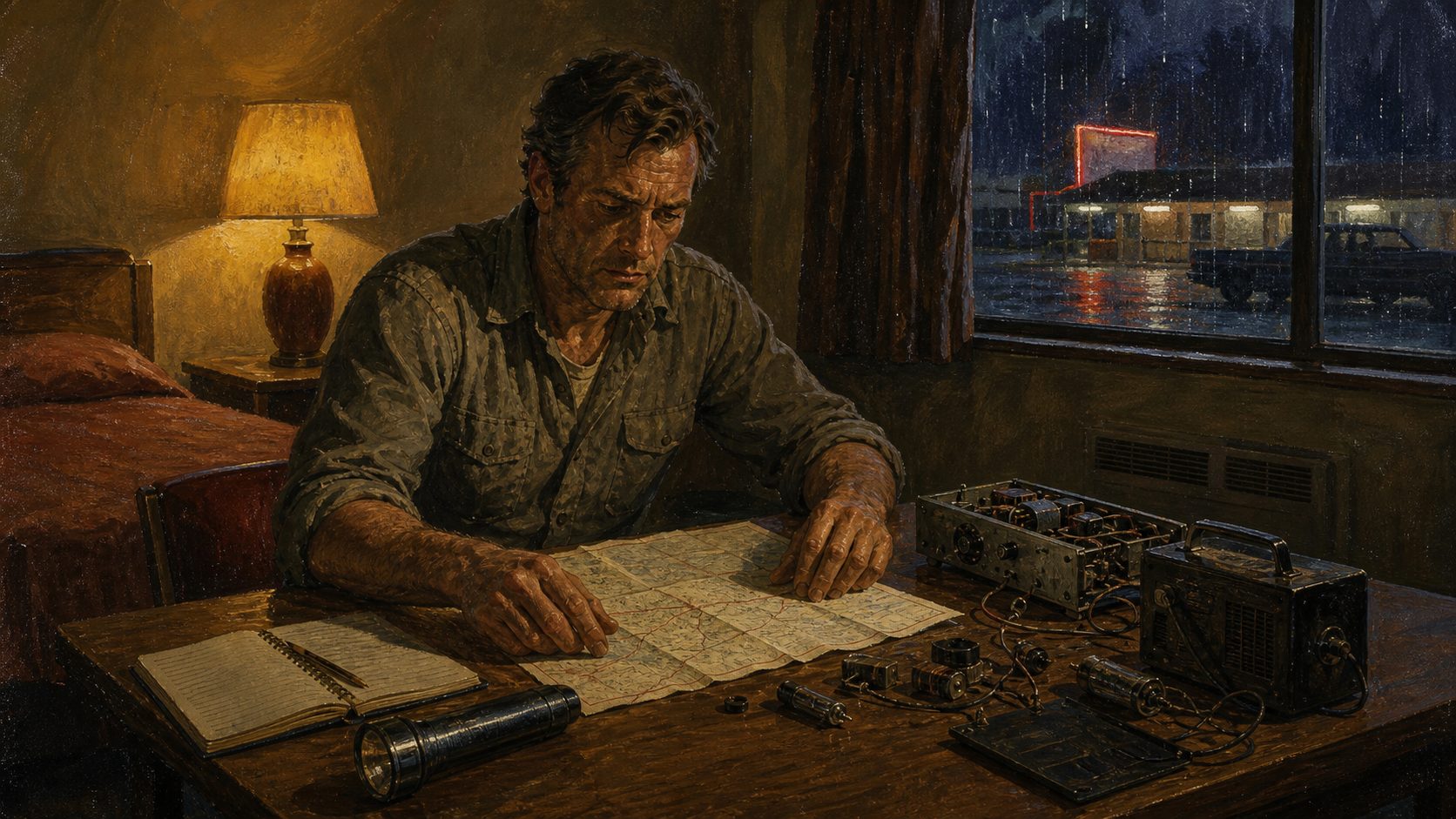
The capable hero studies before he moves. He learns the guard rotation, leans on an informant, picks a route, cleans his gear, and builds a second plan because the first one's going to fall apart. Even Remo Williams, whose impossible abilities shove The Destroyer halfway into fantasy, is defined by training. Chiun's lessons give that power its shape, its lineage, and most of its comedy.
Preparation is what builds trust between the hero and you. When the tool that saves him in the climax showed up honestly back in the planning, the win feels earned. When he pulls exactly what he needs out of nowhere, it feels handed to him by the author. And this pleasure hit hardest for readers whose own skills went unnoticed. A mechanic or a machinist or a soldier or a driver knows the gap between a job that looks easy and a job made to look easy by twenty years of doing it. The paperback hero gets to live where that knowledge is visible and decides who lives. He pays attention, and paying attention saves lives.
Expertise needs a fence around it
Competence goes dull the second it turns into knowing everything. If the hero always spots the trap, always packed the right gear, always knows more than every specialist in the room, it stops being reassuring and turns into ritual. You quit wondering how he'll get out and just wait for the book to confirm he's better than everyone.
The answer isn't to make him dumb. It's to give the expertise a boundary. A marksman can get forced into talking his way out. A loner can end up needing scared civilians to cooperate. A planner can run into an enemy who won't behave rationally. A warrior can hit a situation where pulling the trigger would destroy the exact thing he's there to protect. Problems like that honor a hero's competence by making it grow. And the good books make him pay for his mistakes: a missed detail costs time, a bad read costs trust, an injury rewrites the plan. Consequence is what turns skill from a superpower back into a human virtue somebody practiced for.
Discipline versus domination
There are two flavors of the competence fantasy. In one, the hero masters himself. In the other, he masters everybody around him.
Self-mastery wears better. That's fear run instead of denied, anger with an aim on it, and the unglamorous prep put in on the nights swagger would have been the easier call. Domination gives you a fast little thrill, but a hero who has to humiliate everyone starts looking less sure of himself, not more. This is worth holding onto when you read the older books, because some of them mistake contempt for strength. The hero proves himself by treating officials, women, foreigners, or anybody cautious as a fool. That's not competence. That's the writer lowering the whole world until the hero can look tall standing in it. A genuinely capable man doesn't need everyone else to be useless.
The dignity of being useful
Competence starts to mean something when it serves something past the hero himself. His skill matters because somebody less ready is in trouble. The rescue, the warning, the repair, the sacrifice, that's the point. The showing off is just decoration on top.
It's why the quiet-work scenes often stay with you longer than the big explosion. The hero binding a wound, teaching an ally, noticing a witness is terrified, staying awake while the others sleep, that's where you see the man his skills have built. There's pride in it, but there's a weight too. Being ready takes years of unglamorous work. It might earn no thanks at all. It's there before the emergency and it's still there after everybody's stopped clapping. The real appeal of the paperback warrior is that he takes the job seriously even when nobody's watching him do it. That's no 1970s relic. That's about as good a definition of character as you'll get.
Next in the series → ← Back to The Pulp Desk