The Vigilante's Moral Ledger
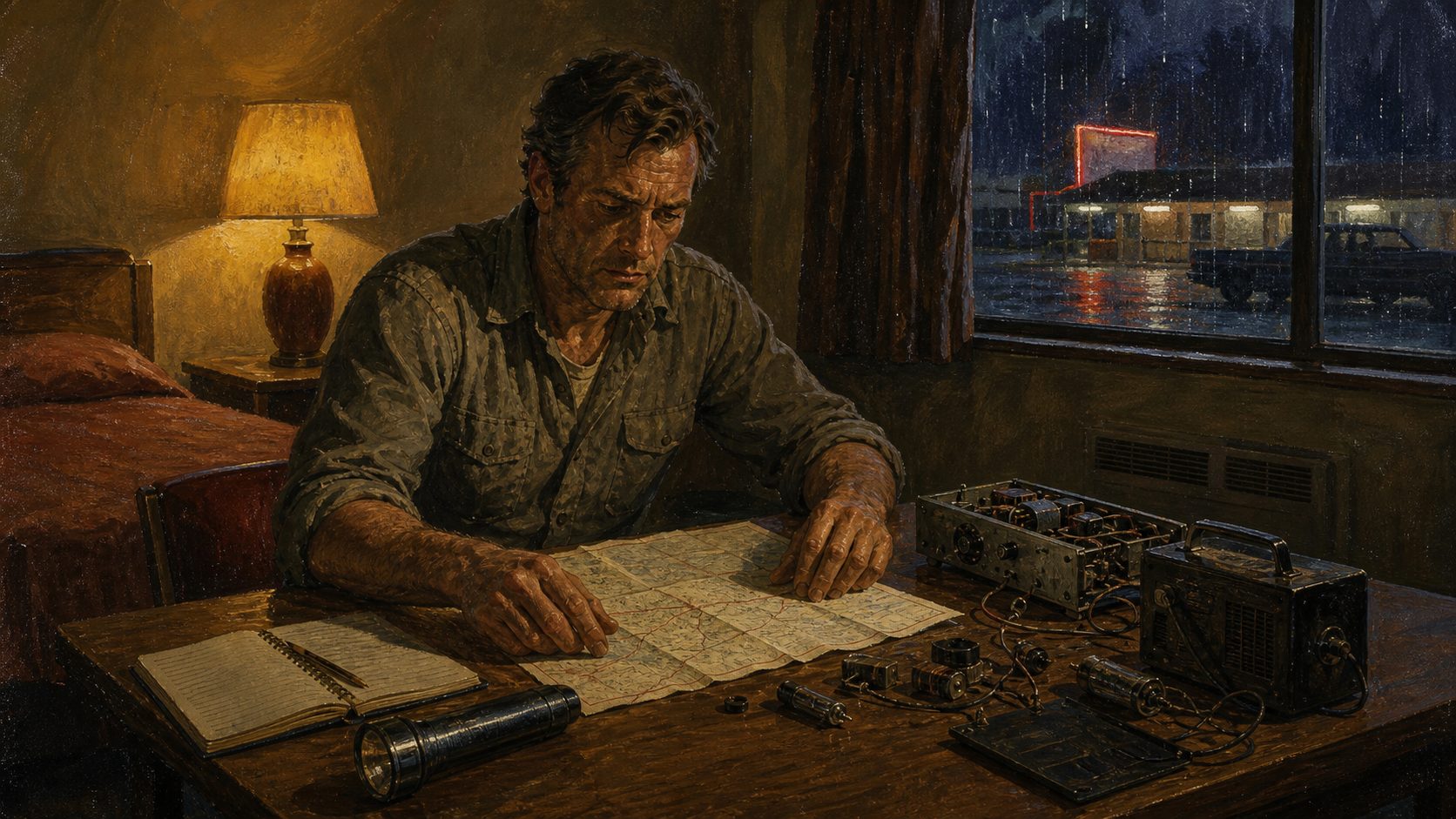
Every vigilante story is asking the reader for a signature.
The ask gets buried under a stolen kid, a slaughtered family, a bought judge, some villain vicious enough to burn off any second thoughts you might have had. But before the hero lays a hand on anybody, the story is busy building its case. Here's why the law won't do the job. Here's why this particular man can be trusted to do it instead.
The shooting doesn't start until the paperwork's filed.
Making the target guilty enough
Easiest way to file it is to build a monster. The villains don't just steal, they feed on the helpless. They don't just kill, they like it. They lean on witnesses, buy cops, and laugh at anybody decent enough to object.
It works. It also pulls a fast one. Kill off every doubt about the target and the book never has to face the dangerous question, which is who handed this man the authority in the first place. You end up judging the victim instead of the process.
And the process is the whole ballgame, morally. A man working alone can be brave and well-informed and dead sincere and still be wrong. He can swallow a lie. He can finger the wrong guy. He can let a little hatred plug the holes where the evidence should be. All those maddening delays and safeguards in the law exist partly because people's judgment fails, his included.
The vigilante rips out the safeguards and hands you his personal code as the replacement.
What a code has to do
A code that's worth anything isn't a slogan. It has to stop the hero from doing something he badly wants to do.
"Protect the innocent" only means something when protecting them lets a guilty man walk. "Verify the target" only means something when the waiting is what gets you killed. "Use only necessary force" only means something when you're shaking with the urge to use more. A code that nods along with every impulse the hero has isn't a code. It's paint.
Mack Bolan carries moral weight because you believe he knows the difference between killing and murder, even when the people around him won't buy the distinction. His war is pointed at predators, not at society at large. He takes the guilt onto himself instead of pretending good intentions rinse his hands clean.
Other heroes keep darker books. Richard Camellion, the Death Merchant, can handle expedience with a coldness that makes Bolan look almost tender by comparison. And that gap isn't about who racks up more bodies. It's about one thing: whether an innocent life is a wall the mission simply cannot go through.
Take that wall away and your protector is just one more outfit deciding which lives it can spend.
Revenge, punishment, protection
They ride together a lot, but they aren't the same animal.
Revenge pays pain back with pain. Punishment says the wrong earns a consequence. Protection is about stopping the next harm before it lands. One gunshot on the page can be all three at once, and still the mix matters.
A revenge story is over when the debt clears. A protector's story can't ever be over, because the danger doesn't stop coming. That's part of why series heroes slowly start describing their wars in bigger and bigger words. The personal wound lights the fuse. Protection is what keeps the franchise printing.
Sometimes that deepens the man. He grows out of private grief and into something like service. Sometimes it just hides an obsession. A man who can't picture himself without an enemy across the room will happily call his compulsion duty.
The best of these books let somebody, anybody, put the question out loud: is the war still serving his life, or has his life started serving the war?
The fantasy of clean violence
Vigilante fiction makes a promise. Violence can be aimed, precise, dropped right on the guilty. The innocent walk. The corrupt get dragged into the light. The hero's bullet finds the one man the paperwork could never reach.
Reality doesn't take the order so politely. Violence scares witnesses, breeds payback, catches bystanders, and spills fear way past whoever it was meant for. Nobody needs a book to turn into a lecture from the bench. But some sense of consequence is what keeps its moral claims from being hot air.
The hero ought to need restraint more than ammo now and then. He ought to notice that scaring the wicked tends to scare everybody living on their street too. A neighborhood that's terrified isn't the same thing as a neighborhood that's free, and he ought to know the difference.
Why we still want him anyway
None of this kills the appeal. People run into systems built mainly to protect themselves. They watch the powerful skate. They see the rules bend one way for money and another way for everybody else. The vigilante is what anger at that impunity looks like when it stands up and puts a coat on.
At his best he isn't a middle finger to justice. He's an accusation made in justice's name. He's an embarrassment to every institution that made one man go do by himself what they were supposed to do by law.
So the criticism can't just stop at "vigilantism is wrong." The book already knows it's stepping over a line. That's where the charge comes from. The question worth asking is what the crossing shows you. Does the story get off on the power, or grieve that force was needed at all? Does the hero savor the judgment, or lug it around like a weight? Would he hand back his private authority the day real justice showed up to relieve him?
That last one's the one that counts.
A man who's genuinely fighting for civilization ought to want a world with no more use for him.
And the standing joke of the paperback warrior is that the world never quite gets there before the next volume.
Next in the series → ← Back to The Pulp Desk